
Is My Hearing Aid Broken? Signs You Need Repair
In a town the size of Howell, a quick errand downtown usually turns into
By: Paige Drees, AuD | October 27, 2026
In a town the size of Howell, a quick errand downtown usually turns into at least one conversation on the sidewalk. You stop to catch up with a neighbor or an old coworker, and for a few minutes nobody is in a hurry.
Then your hearing aid crackles or cuts out right in the middle of their story. You nod along and hope you laughed at the right part.
That is the tricky part about a hearing aid that needs repair. Most of the time you can find an easy explanation, like a low battery, a little wax on the speaker or a noisy room.
Sometimes that explanation is right, but a hearing aid can also fail slowly enough that you adjust without realizing it. Knowing which signs point to a real repair saves you weeks of guessing and a lot of missed conversations.
When a hearing aid suddenly sounds different, it is easy to assume something has gone wrong inside the device. Maybe the volume seems lower, you hear an unfamiliar buzz or one hearing aid stops producing sound altogether.
Sometimes there is an obvious problem, such as cracked tubing, a damaged casing or a loose piece. Other issues are much less noticeable and come from wax, moisture or a battery that is losing power. If a fresh battery or basic cleaning does not change anything, the problem could be deeper inside the device.
Listen for changes that keep happening rather than a single odd sound. Persistent distortion, buzzing or sound that repeatedly disappears deserves a closer look.
Hearing aids use microphones to pick up sounds around you, process those sounds and deliver them at levels programmed for your hearing. When everything is working properly, conversation should come through consistently without unexpected distortion.
Plenty of everyday things can interfere with that process. Earwax can cover the speaker opening, while dust or debris can block a microphone. Moisture from sweat or humidity can also reach areas that need to stay dry.
Power problems are another common culprit. A weak disposable battery, poor charger connection or a dirty contact can cause a hearing aid to shut down unexpectedly. Drops, excessive heat and other physical damage are more likely to create problems that require repair.
Not every beep or squeak coming from your hearing aids signals trouble. Many devices play tones when they turn on, switch programs or need to be charged. You might also hear a quick squeal while putting a hearing aid in before it is fully seated.
A whistle that keeps returning is different. Feedback happens when amplified sound escapes your ear and gets picked up again by the hearing aid microphone. A dome that has shifted, an earmold that no longer fits well or wax in the ear can all contribute.
Crackling and static deserve attention too, especially when they continue throughout the day. Check the tubing, casing and removable pieces for anything loose, cracked or damaged. Persistent noises after those basic checks could point to a problem inside the hearing aid.
Muffled hearing aid sound often has a surprisingly simple explanation. Wax can collect over the sound outlet and gradually make voices seem quieter or less sharp. Dust, lint or other debris around the microphones can interfere with incoming sound as well.
With disposable-battery models, a weak battery or loose battery-door connection can interrupt power. Rechargeable hearing aids can have similar trouble when they are not making solid contact with the charger.
Moisture can also cause sound to behave unpredictably. If your hearing aids have been exposed to sweat or humidity, drying them according to the manufacturer’s instructions is a reasonable first step.
Earwax is one of the easiest things to overlook when sound starts changing. It can collect around the speaker opening or wax guard and gradually make voices seem softer or muffled. Dust, hairspray and styling products can also settle around microphones and interfere with sound.
Fall weather in Howell brings cooler mornings, damp afternoons and bigger temperature swings between indoors and outdoors. That mix can expose hearing aids to condensation, light moisture and sudden changes in temperature.
Coming inside from chilly weather can create another issue. A cold hearing aid warming up in a heated room can develop condensation inside the casing or tubing. A drying system made for hearing aids can help remove moisture that a quick wipe cannot reach.
If your hearing aid worked fine this morning and now you can’t get a peep out of it, don’t panic. A silent hearing aid isn’t always a broken one. Before you start thinking about repairs, check the easy stuff first.
Work through these basic checks when your hearing aid stops producing sound:
Small problems on the outside of a hearing aid can affect how well it works. A cracked shell, loose battery door or damaged hinge can make it harder for the device to maintain steady power. Openings in the casing can also make it easier for moisture and debris to get inside.
Buttons and controls deserve a quick look too. Skin oils, dust and hair products can collect around push buttons or volume controls and make them harder to use. If a button suddenly feels sticky or does not respond the way it usually does, buildup around the control could be part of the problem.
Battery contacts can create similar issues in disposable-battery models. A fresh battery will not help much if the metal contacts are dirty, corroded or no longer connecting properly. Repeated low-battery alerts or sudden shutdowns are worth checking before assuming the device itself has failed.
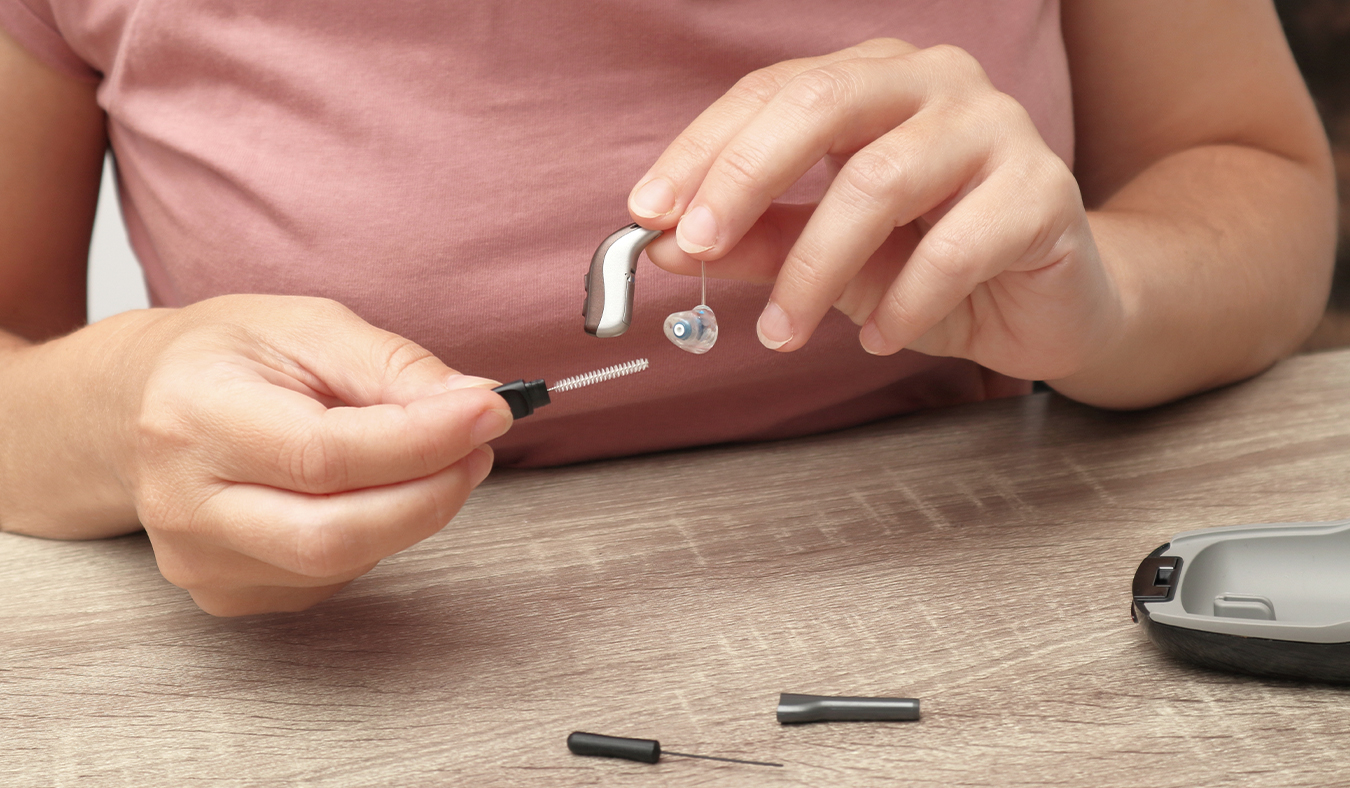
Basic cleaning solves plenty of everyday hearing aid problems. Replacing a wax guard, checking the battery or clearing debris from an opening can bring the sound back almost immediately. Other problems point to damage that needs more than a cleaning tool.
A few problems are better handled by an audiologist:
Some hearing aid problems are easy to handle at home, while others need a deeper look. An audiologist has tools for checking internal components, cleaning areas you cannot safely reach and testing whether the device is producing sound correctly.
Sometimes a fresh battery or full charge still doesn’t bring the sound back, even with a clean wax guard and speaker. When that happens, it’s time to have someone take a look. The same goes for a hearing aid that keeps cutting out, has loose parts, crackles with static or stops responding when you press the buttons.
When you bring in a hearing aid that is acting up, the first step is usually a close inspection. Your audiologist will look for wax, moisture, cracked parts or anything blocking the microphones or speaker.
Some problems can be handled right in the office. That might include replacing tubing, changing a wax guard, cleaning internal openings or fixing a loose component. If the issue is deeper inside the hearing aid, the device may need to go back to the manufacturer for repair.
Your audiologist can also help determine whether repairing the device still makes sense. Age, repair history and the cost of replacement parts can all factor into that decision. In some cases, an older device may be closer to the end of its useful life.
A hearing aid that crackles, whistles or fades in and out is telling you something, even when the cause seems small.
Some fixes are as simple as a new wax guard or a fresh battery. Others need a closer look, and catching them early can keep a minor problem from turning into time without your devices.
At Advanced Hearing of Brighton in Howell, Michigan, we can check your hearing aids and tell you whether they need cleaning, an adjustment or repair. That way, the next time you run into someone downtown, you can follow every word of the conversation.
Call us at (810) 355-2245 to schedule a visit.
In a town the size of Howell, a quick errand downtown usually turns into
By: Paige Drees, AuD | October 27, 2026

If your family’s been out at the Livingston County Fair or spending
By: Paige Drees, AuD | August 24, 2026

Pollen season has a way of making everything just a little harder to keep
By: Paige Drees, AuD | May 18, 2026